
How to Search Lee County Court Records
Lee County does not publish one free, countywide, text-indexed portal for every Superior Court case. A Lee County Court records search works best as a routing task. Superior Court case files and land records start with the Clerk of Superior Court. Magistrate civil records from 2023-present use an account-required Tyler public-access system. Probate Court handles estates, marriage, vital records, and some traffic fines. Sheriff's Office records use Citizen Connect for bookings, arrest search, incident search, accident search, daily reports, maps, and inmate confinements.
The official county courts landing page is the broad starting point for Lee County Court records.
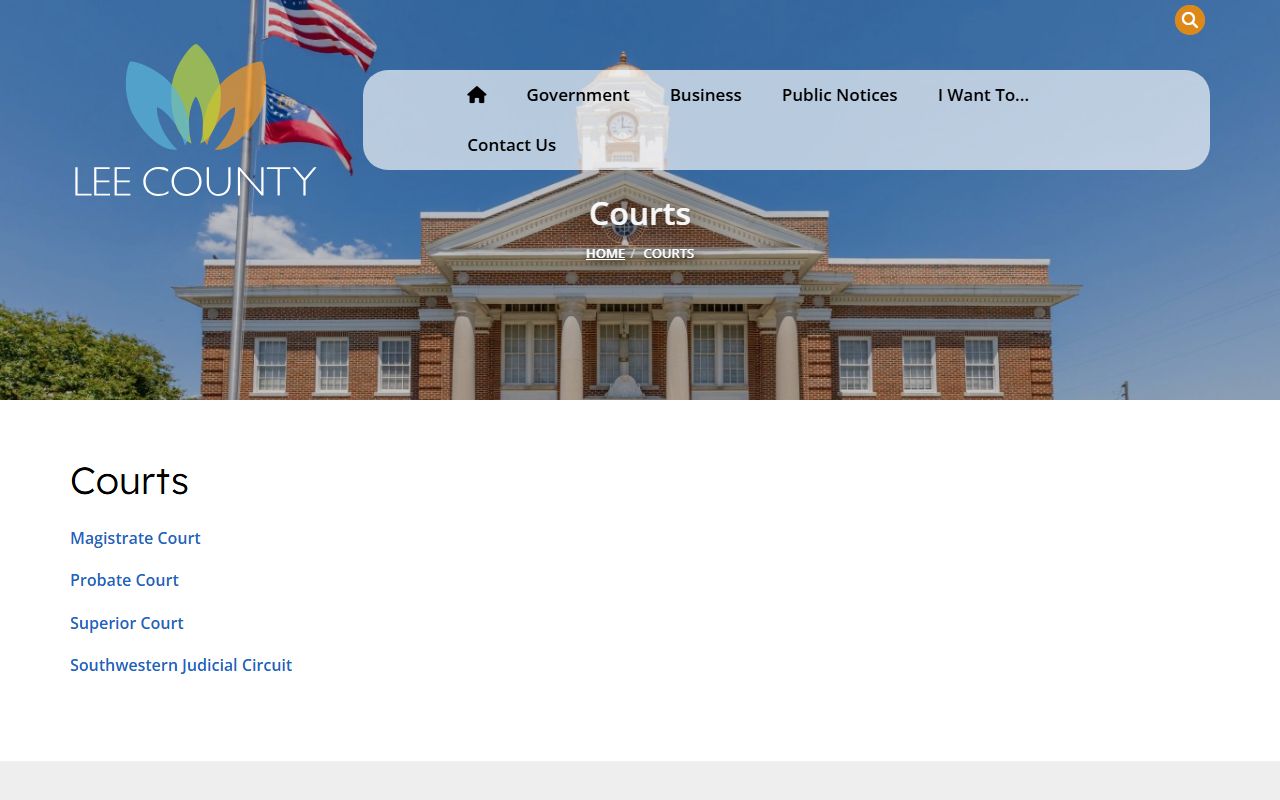
That court page confirms the local court set: Magistrate Court, Probate Court, Superior Court, and the Southwestern Judicial Circuit.
Before searching, gather the person's full name, case type, approximate date, court name if known, citation number if it is traffic-related, and whether a certified copy is needed. For older court files, sealed files, certified copies, and Superior Court case details not available online, call or visit the clerk office rather than relying on a web index alone.
- Identify the record type: Superior Court case, Magistrate civil file, Probate Court file, sheriff record, traffic fine, marriage, divorce, or jail record.
- Use the official office page or portal for that record type, such as the Clerk of Superior Court, Tyler Magistrate civil access, Probate Court, or Citizen Connect.
- Search with the strongest identifier available, such as case number, civil action number, citation number, incident number, name, or date range.
- Check whether the result is a court record, law-enforcement record, driver-history record, or payment record before relying on it.
- Request a certified copy from the issuing office when the record must be used for legal, title, agency, or official purposes.
Lee County Court System
Georgia's trial-court system includes Superior, State, Juvenile, Probate, Magistrate, and Municipal Courts. Lee County's local court pages list Magistrate Court, Probate Court, Superior Court, and the Southwestern Judicial Circuit. Superior Court is the general-jurisdiction trial court. Magistrate Court handles lower-dollar civil claims, warrants, preliminary hearings, bond hearings, ordinance matters, bad checks, and garnishments. Probate Court handles estates, wills, guardianships, marriage licenses, vital records, firearms licenses, and assigned traffic fines.
The Georgia Courts court hierarchy explainer gives statewide context for those court levels.
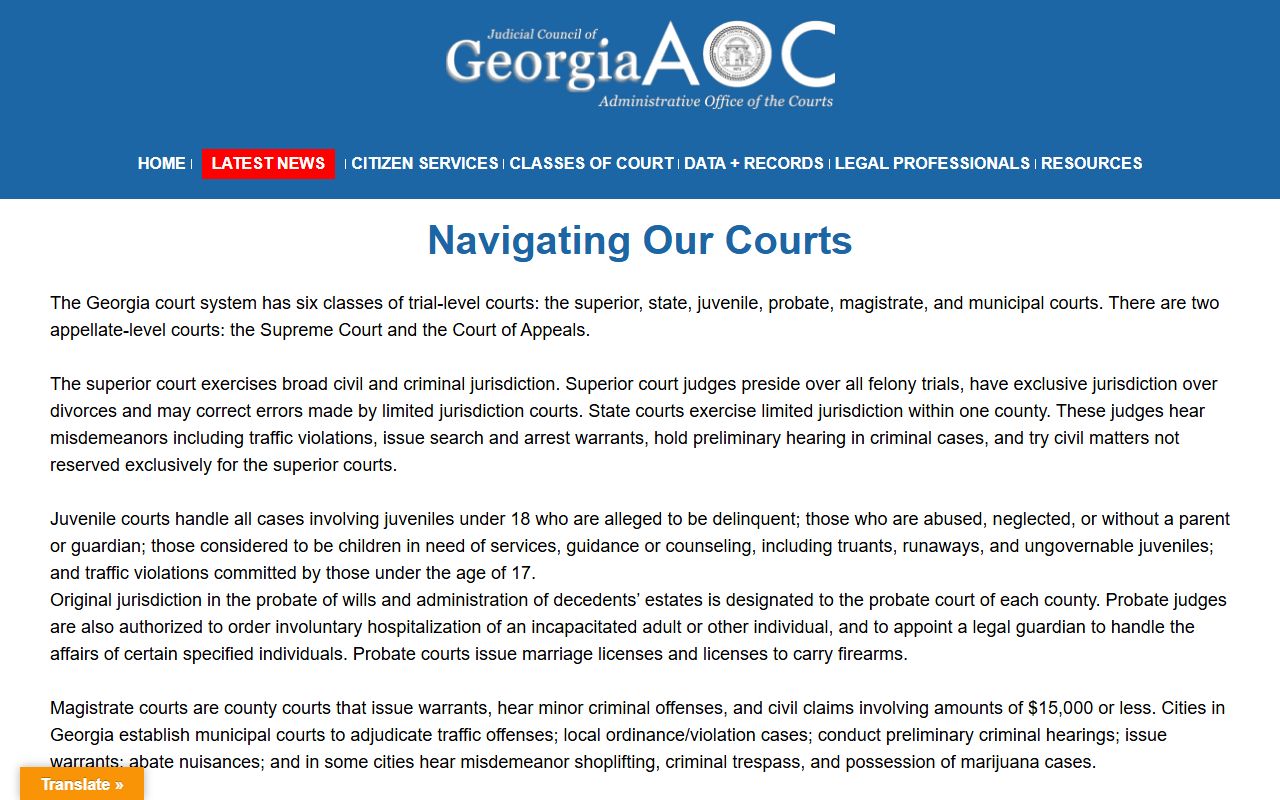
The statewide hierarchy explains why a Lee County Court records search may start locally but still require state-level court terms and access rules.
Case flow: Magistrate warrant or first appearance › Superior Court filing › hearings and motions › disposition or judgment › Court of Appeals of Georgia when an appeal is taken.
| Court | Jurisdiction | Case Types |
|---|---|---|
| Superior Court | General jurisdiction | Criminal cases, major civil cases, divorce, adoptions, name changes, habeas, garnishments, deeds, liens, warrants filed in Superior Court |
| Magistrate Court | Limited jurisdiction | Civil claims up to $15,000, dispossessories, warrants, preliminary hearings, bond hearings, ordinance violations, bad checks |
| Probate Court | Limited probate and licensing jurisdiction | Estates, wills, guardianships, conservatorships, marriage licenses, vital records, traffic fines, firearms licenses |
Lee County Courthouses
Lee County Court records are centered around a small group of Leesburg offices. The courthouse on Leslie Highway houses the Clerk of Superior Court and Probate Court. Magistrate Court is nearby in the Courthouse Annex. County open-records coordination is at the T. Page Tharp Governmental Building on Starksville Avenue North, and sheriff records come from the Criminal Justice Center on Pinewood Road.
Sheriff Criminal Justice Center
119 Pinewood Road
Leesburg, GA 31763
(229) 759-3334
Types of Court Records Available in Lee County
Lee County Court records include civil, criminal, probate, marriage, divorce, warrant, traffic, real estate, and sheriff-related records, but each category has its own custodian. Superior Court files criminal and civil cases, divorces and annulments, adoptions, name changes, habeas cases, suits for damages, garnishments, and repossessions. Magistrate Court handles account-required civil files from 2023-present and several warrant and preliminary-criminal functions. Probate Court handles estates, marriage, vital records, and traffic-fine payments assigned to that court.
The county official homepage is one source for countywide navigation that points to courts, sheriff, open records, property records, and traffic-fine payment.

That homepage helps confirm that court record searching in Lee County often means moving among county departments rather than using one search box.
Sheriff records can identify arrests, bookings, incidents, accidents, and jail custody. They are not the same as final court records. A Citizen Connect arrest result may show an arrest date and alleged charge, while the court file shows the formal case events, plea, dismissal, disposition, sentence, or judgment.
- Criminal records show charges, hearings, pleas, motions, dispositions, sentencing, probation, and revocations.
- Civil records may include complaints, summons, answers, judgments, garnishments, repossessions, and appeals.
- Family and divorce records route to Superior Court, while marriage licenses route to Probate Court.
- Probate records cover estates, wills, guardianships, conservatorships, inventories, and letters.
- Traffic records include Probate Court fine payments, accident reports, and separate Georgia DDS driver histories.
What Lee County Court Records Show
A Lee County Court record may show a case number or civil action number, court name, parties, filing dates, hearing dates, charges or claims, motions, orders, judgments, financial fields, dispositions, and attached documents. Magistrate forms use "Civil Action No." and include plaintiff and defendant contact fields, claim type, jurisdiction basis, amount claimed, oath, summons, and answer warnings. Criminal files may include charges, warrants, bond, arraignment, pleas, sentencing, and probation orders.
| Field | What It Shows |
|---|---|
| Case number | The court's file identifier, such as a civil action number on Magistrate Court forms. |
| Filing date | When the petition, complaint, warrant, citation, or initiating document was filed. |
| Parties | Plaintiff and defendant, petitioner and respondent, State of Georgia and defendant, or estate parties. |
| Charges or cause | Criminal charge, civil claim type, probate matter, citation offense, or other reason for the case. |
| Disposition | The case or charge outcome, such as judgment, dismissal, plea, conviction, sentence, or final action. |
| Financial fields | Costs, fines, restitution, bond, principal, interest, late fees, attorney fees, and copy charges when shown. |
Public Access Laws for Lee County Court Records
Lee County public access starts with Georgia's Open Records Act, O.C.G.A. 50-18-70 et seq., but court records are also shaped by court rules, confidentiality laws, redaction rules, and clerk procedures. Lee County's open-records page says the Act gives the public a right to inspect or receive public records except records exempted by law or court order. It also asks requesters to be specific with dates, subjects, record types, authors, and similar details.
Key Statutes:
O.C.G.A. 50-18-70 et seq. - Georgia's Open Records Act creates broad public access unless a law or court order exempts a record.
O.C.G.A. 50-18-71 - Agencies may charge lawful copy, search, retrieval, and redaction costs.
O.C.G.A. 35-3-37 - Georgia's record-restriction law controls eligible criminal-history restriction for non-criminal-justice uses.
Records That Are Restricted or Confidential
Not every Lee County Court record is open in full. Juvenile court information, adoption files, sealed records, restricted criminal-history records, victim information, minor identifiers, Social Security numbers, financial account numbers, medical details, mental-health records, and some guardianship information may be withheld or redacted. A public online index can also omit documents that are public at the counter but not available online.
When a record is sealed or restricted, the clerk cannot treat it like an ordinary file. The requester may need a court order, statutory authority, party status, or proof of identity. For sensitive records, call the custodian first and ask what access rule applies before mailing payment or traveling to Leesburg.
Specialty Courts in Lee County
Lee County is within the Southwestern Judicial Circuit, and the research found a circuit accountability court reference through the Council of Accountability Court Judges directory. Accountability courts are problem-solving court programs that may address substance use, mental health, compliance, treatment, and supervision in eligible criminal matters. These records still connect back to court orders, case status, and confidentiality rules.
Specialty-court details can change faster than ordinary clerk contact information. For current program participation, eligibility, and record access, use the Southwestern Judicial Circuit contact path or the court handling the case.
Lee County Sheriff and Jail
The Lee County Sheriff's Office is led by Sheriff Reggie Rachals and operates from the Criminal Justice Center on Pinewood Road. The county page says the Criminal Justice Center capacity is 140 inmates and links Citizen Connect for bookings, missing persons, reports, maps, personnel feedback, and inmate confinements. Citizen Connect is the public sheriff-record system, not a court docket system.
The Georgia Judicial Gateway is the statewide court access source shown in the home-page image set.

The statewide gateway complements local sheriff and court links, but it does not replace Lee County's own custodians.
Use Lee County inmate records for jail custody and booking details. Use Lee County warrant records for warrant-routing information. For a final charge outcome, use the court file rather than the arrest or booking listing alone.
Marriage, Divorce, and Probate Court
Marriage licenses, certified marriage copies, birth and death certified copies, estate matters, guardianships, conservatorships, traffic fines, and firearms licenses route through Probate Court. Marriage licenses are issued Tuesday-Friday by appointment only, and Probate Court prefers appointments for all services. Divorce decrees are not Probate Court records; Lee County open-records routing sends divorce decrees to Superior Court.
Replacement certified marriage certificates can be ordered through FeePayOnline for $12 according to Probate Court. Vital-record certified copies cost $25 for the first copy and $5 for each additional copy. Probate Court also accepts traffic-fine payments in person, by postal money order through USPS, or online through EZCourtPay by 9:00 am on the citation due date.
- Docket
- The chronological list of filings and court events in a case.
- Disposition
- The final outcome of a charge, claim, or case event.
- Certified copy
- An official copy bearing clerk certification for legal or official use.
Lee County Court Fees
Fee details differ by office. Lee County posts open-records costs and several Magistrate Court fees. Probate Court posts marriage and vital-record copy fees and traffic payment rules. Superior Court copy and certification fees were not found in a Lee County official online table, so confirm those directly with the Clerk of Superior Court before sending payment.
| Item | Amount |
|---|---|
| Open-records copies | $0.10 per page |
| Open-records labor | First 15 minutes free, then lowest-paid qualified employee rate |
| Magistrate Statement of Claim | $110 |
| Magistrate certified copy of judgment | $14 |
| Magistrate warrant application | $20 |
| Certified marriage certificate replacement | $12 |
How to Interpret Lee County Court Records
Read a Lee County Court record by first naming the record source. A booking record shows law-enforcement custody. A warrant record shows authority to arrest or search. A charge line shows an allegation or formal count. A disposition shows the outcome. A sentence shows punishment or supervision after conviction. In civil cases, a judgment is the court's final decision on liability, damages, possession, or other relief.
Charges and convictions are not the same thing. Citizen Connect may show an arrest or alleged charge before a prosecutor files a final charging document, amends a charge, dismisses it, or resolves the case by plea or trial. To verify outcome, use the court file or clerk office rather than relying only on arrest data.
Accuracy and Record Limitations
Lee County Court records can lag behind hearings, filings, payments, arrests, and jail releases. Citizen Connect daily report pages also warn that incident and accident reports may not be available for up to 72 hours from the date a report was filed. Magistrate civil access is advertised for 2023-present and requires account creation, which means older or offline records may need office contact.
Note: Confirm case status, payment deadlines, and certified-copy needs with the originating Lee County office before relying on an online summary.
History of Lee County Courts
Lee County courthouse history affects older record research. New Georgia Encyclopedia says the original courthouse was built in Starksville, the county's first seat, around 1837 and burned between 1856 and 1858. The county seat later moved to Wooten Station in 1872, and the town became Leesburg in 1874. Older records, land references, or historical court materials may use Starksville, Wooten, or Leesburg depending on the period.
The City of Leesburg history page describes Wooten Station and the county-seat transfer.
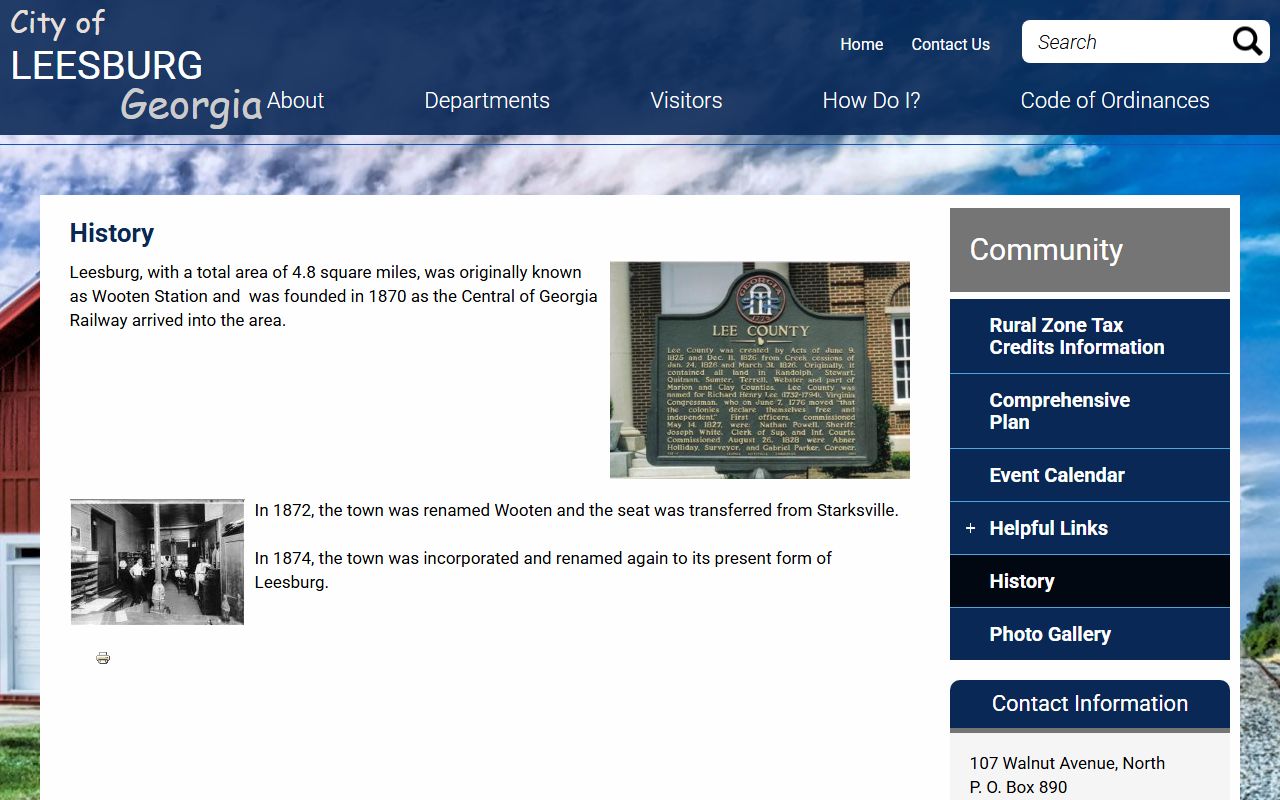
That local history explains why genealogical and courthouse research may require more than the modern Leesburg office name.
The New Georgia Encyclopedia gives additional Lee County background.
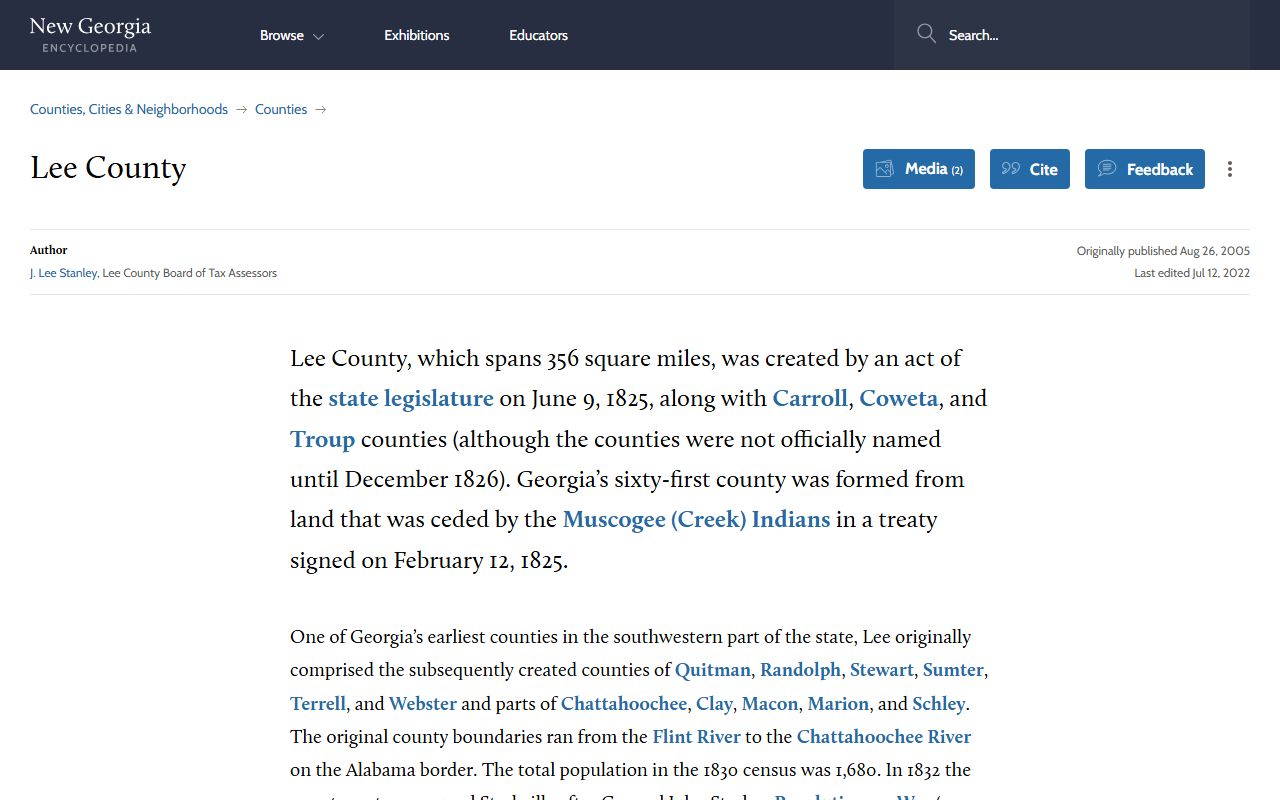
Historical context is most useful when a search involves nineteenth-century records, courthouse loss, or old county-seat names.
A separate New Georgia Encyclopedia courthouse note addresses the historic Starksville courthouse.
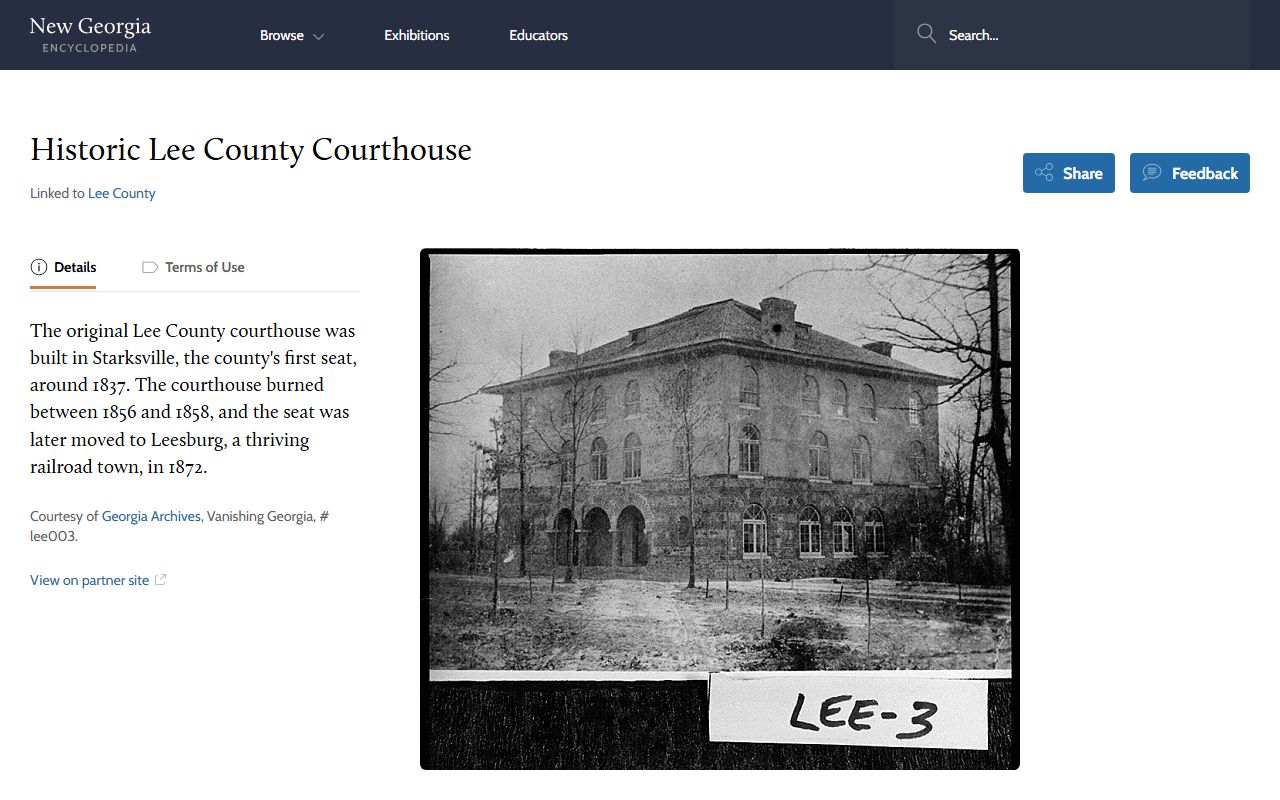
The Starksville courthouse note is a reminder to check historical repositories when a record predates modern Lee County courthouse custody.
Frequently Asked Questions
Where do Lee County Superior Court records start?
Superior Court records start with the Clerk of Superior Court at the courthouse. Use that office for criminal and civil case files, divorce decrees, deeds, property liens, warrants filed in Superior Court, and certified court copies.
Is Magistrate Court online?
Lee County Magistrate Court links civil public access for files from 2023-present through a Tyler login. Account creation is required, and the public page does not function as an anonymous countywide search for all court records.
Are sheriff records court records?
No. Citizen Connect sheriff records can show bookings, arrests, incidents, accidents, and inmate confinements. Those records may help locate arrest facts, but final charge outcomes and sentencing must be checked through the court record.