
Lee County Arrest Records and Court Charges
Lee County arrest records come from the Sheriff's Office and Citizen Connect law-enforcement tools. They can identify the arrest date, arresting agency, booking context, incident category, and alleged charge information. They are not the same as a final criminal case file. The official Sheriff's Office page routes sheriff records, arrest records, and police reports to the Sheriff's Office at the Criminal Justice Center.
Court charges after arrest begin when a charge is placed before the court or when the prosecutor files an accusation, indictment, or other charging paper. The Southwestern Judicial Circuit District Attorney, Lewis R. Lamb, is relevant for felony and many serious prosecutions in Lee County. The full case file, pleas, disposition, sentence, and probation terms belong with the court record, not the arrest entry alone. For custody status, use the Lee County inmate search page.
How to Find Lee County Arrest Records and Charges
The starting point for Lee County arrest records is Citizen Connect Arrest Search, an official vendor-hosted public access tool linked from the Sheriff's Office. Citizen Connect also includes inmate confinements, incident search, accident search, daily report, bookings, missing persons, and most wanted categories. That makes it useful for arrest facts, but it does not prove conviction or final charge outcome.
- Search Citizen Connect Arrest Search by date range for the arrest event.
- Use Incident Search if the arrest relates to a report number, date, name, or location.
- Check Daily Report for arrests, bookings, most wanted, missing persons, accidents, and incident categories.
- Contact the Sheriff's Office for arrest records, police reports, or copies not available through Citizen Connect.
- Verify formal charges through Superior Court, Magistrate Court, or the prosecutor when the question is charge status or disposition.
The Citizen Connect Arrest Search page is the official arrest date-range search point for Lee County sheriff records.
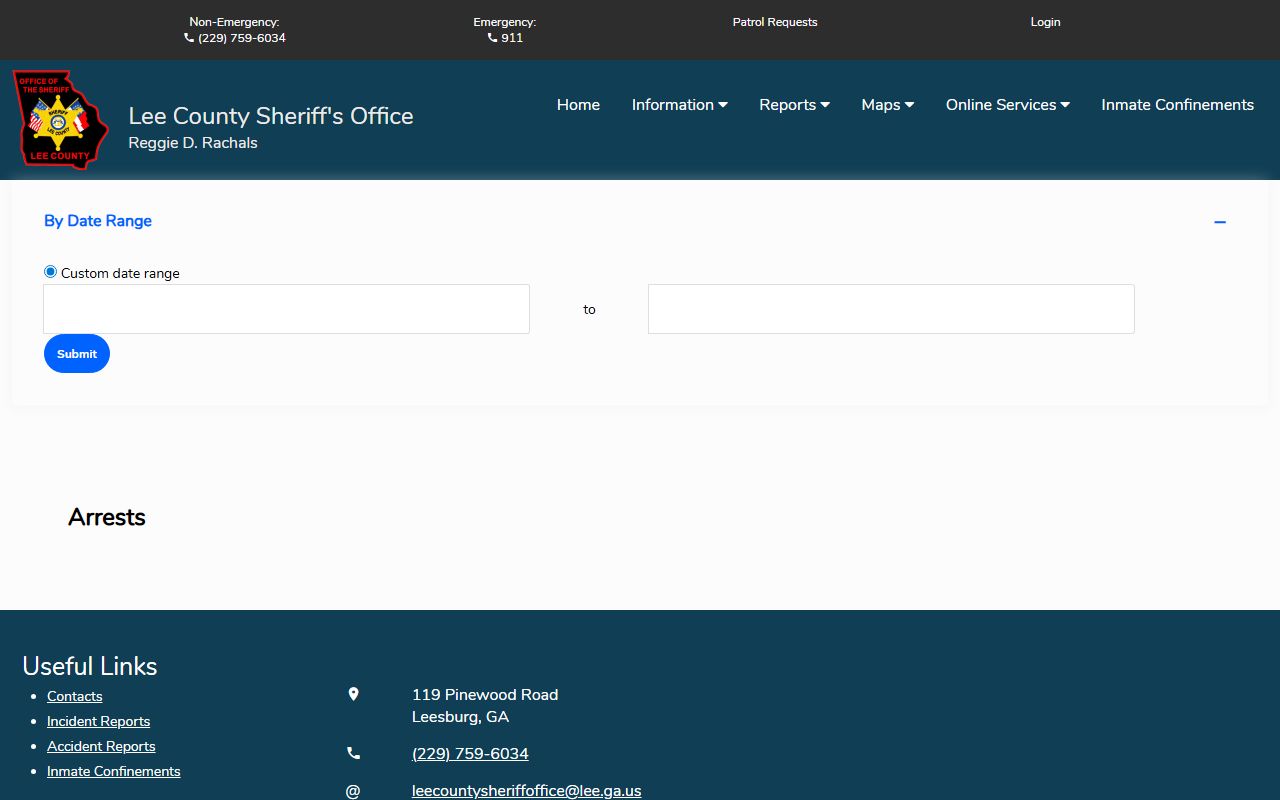
That arrest search is strongest for arrest-event facts, while court charge records require follow-up through court and prosecutor channels.
How Charges Get Filed After an Arrest: Complaint, Information, and Indictment
An arrest can start with an officer's allegation or warrant, but the formal court record depends on what is filed with the court. Georgia sources in the research refer to accusations and indictments, and Magistrate Court handles warrant and preliminary criminal matters. The term "information" is common in many court templates, but Lee County research most clearly supports accusation or indictment for prosecutor-filed criminal charges.
| Complaint or Warrant | Accusation / Information | Indictment | |
|---|---|---|---|
| Filed or initiated by | Law enforcement, complainant, or court process | Prosecutor | Grand jury |
| Lee County context | Magistrate warrant applications, arrest or search warrants, first appearance, and preliminary matters | Prosecutor-filed charge path in the Southwestern Judicial Circuit | Felony or serious criminal charge path in Superior Court |
| What to verify | Issuing court, warrant status, arresting agency, bond, and preliminary hearing status | Charge count, statute, case number, amendment, dismissal, or plea status | Count number, felony charge, grand-jury action, arraignment, and disposition |
The Citizen Connect Incident Search can help connect an arrest to an incident number, person name, date range, or location.
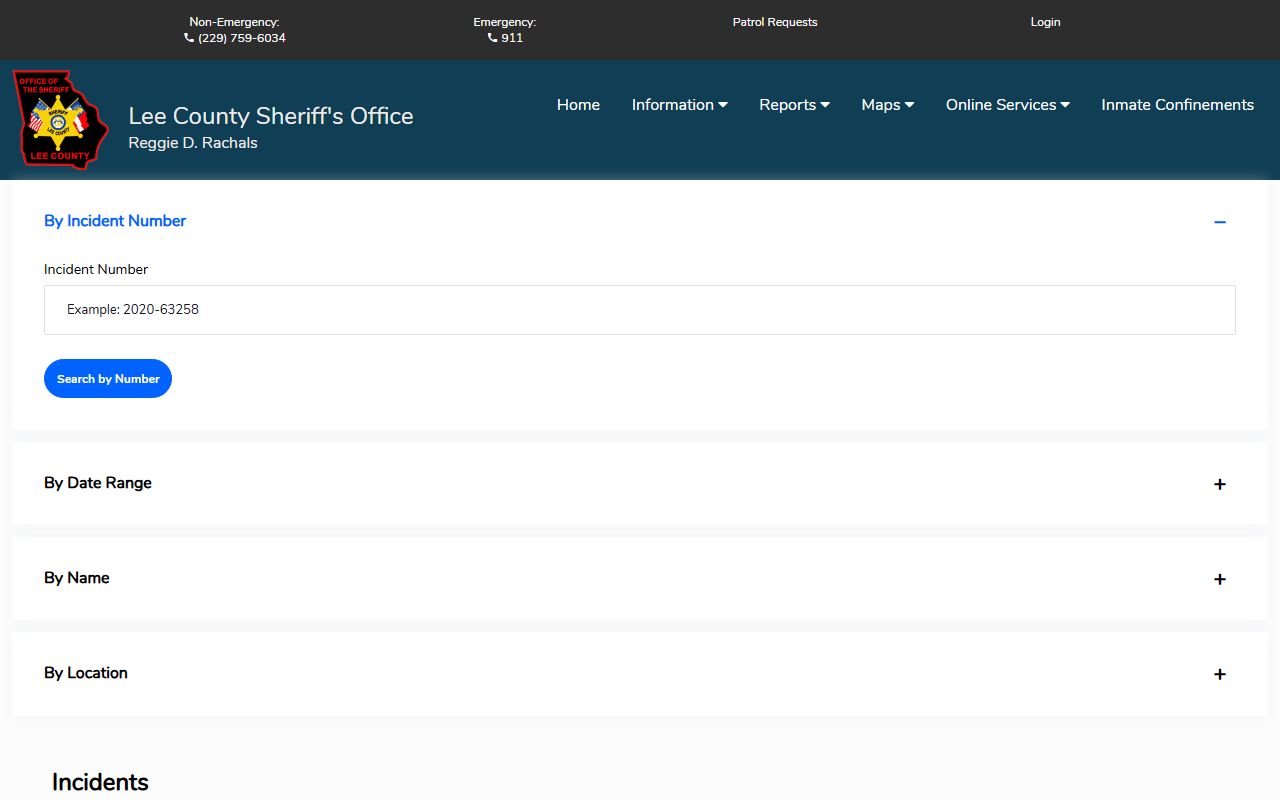
Incident search can provide the report context that helps a requester ask the correct sheriff or court office for the charge record.
Charge Status and What It Means
Charges can change after an arrest. A sheriff arrest record may show the charge alleged at booking, while the court file may later show a prosecutor-filed count, an amended charge, a reduced charge, a dismissal, or a final disposition. For Lee County felony and serious matters, the Southwestern Judicial Circuit District Attorney is the prosecution source to connect with court charge status.
| Status | What It Means |
|---|---|
| Pending | The charge has not reached final disposition in the public court record. |
| Amended or reduced | The prosecutor or court record shows the charge changed from the original arrest or filing. |
| Dismissed | The charge is no longer being pursued in that case, but the arrest record may still exist unless restricted. |
| Nolle prosequi | The prosecutor has declined to continue prosecution on that charge in the case. |
| Convicted | A guilty plea, verdict, or other conviction disposition was entered by the court. |
The Citizen Connect Daily Report brings arrests, bookings, accidents, incidents, missing persons, and most wanted tabs into one public view.
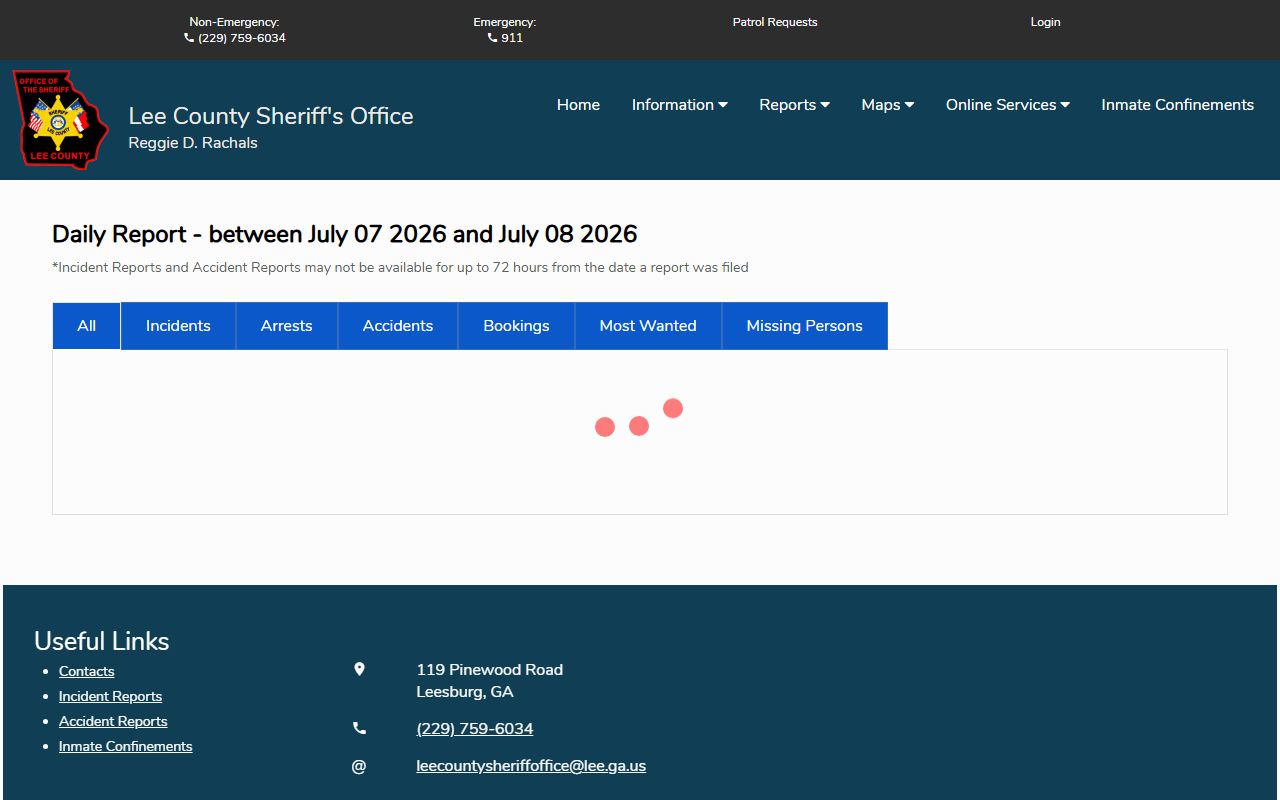
The daily report can be a useful date anchor, but charge status still needs court or prosecutor confirmation.
Charges vs. Convictions
An arrest record is not a conviction, and a charge is not a conviction. Lee County arrest records can show law-enforcement action and alleged offenses, while a conviction requires a plea, verdict, or other final court outcome. This distinction is central when reading court charges after arrest, especially if a charge was dismissed, reduced, amended, or never filed in the same form shown at booking.
| Charge | Conviction | |
|---|---|---|
| Stage | Allegation, warrant, accusation, or indictment | Plea, verdict, or final adjudication entered by the court |
| Where to check | Sheriff arrest tools, Magistrate Court, Superior Court, or prosecutor filing | Superior Court or the court that entered the final disposition |
| Meaning | The person was accused or charged, but guilt has not been established by that fact alone | The court record shows a guilty plea, verdict, or conviction result |
Sealed vs. Restricted Records
Georgia commonly uses the term record restriction, not the broad public term expungement. GBI states that O.C.G.A. 35-3-37 governs restriction of certain criminal-history records for non-criminal-justice purposes when approved by the prosecuting attorney. Court sealing is separate from a criminal-history restriction and may require a court order.
| Sealed | Restricted | |
|---|---|---|
| Visibility | Hidden from general public access by law or court order | Limited from non-criminal-justice criminal-history access when approved under Georgia rules |
| Who may still see it | Court or justice agencies may retain access depending on the order | Criminal-justice agencies may retain access even when ordinary public access is restricted |
| Lee County path | Ask the court that holds the file about sealing orders | For arrests after July 1, 2013, GBI says contact the prosecutor; older arrests may require application at the arresting agency |
The GBI sex offender registry explainer is a separate state registry source, not a general arrest-record or charge-status lookup.
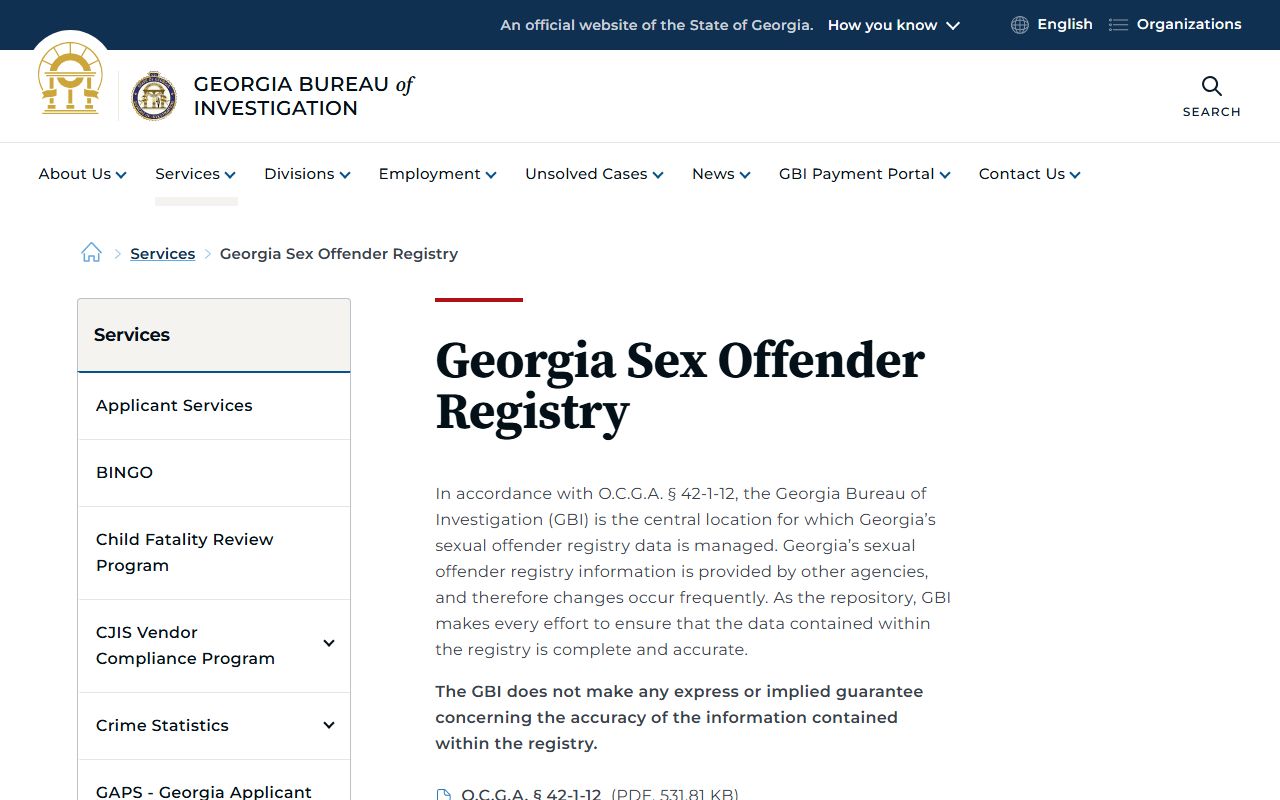
That state registry may appear in criminal-history research, but it should not be used as a substitute for Lee County court charge verification.
Charge Codes and Severity Levels
Lee County charge records may include offense descriptions, statute references, count numbers, misdemeanor or felony classification, warrant number, arresting agency, and bond information. One arrest can produce multiple charges, and each charge can move differently. A charge may remain pending while another is dismissed, amended, or resolved by plea. The complete outcome belongs in the court case file.
Magistrate Court criminal jurisdiction includes county ordinance violations, misdemeanor bad check, criminal trespass, under-21 alcohol beverage violations, shoplifting, possession of marijuana less than one ounce, preliminary hearings, bond, and warrant matters. Superior Court handles the more serious criminal case file and maintains criminal warrants through the Clerk of Superior Court.
Statewide Charge and Criminal History Lookups
Statewide tools can support, but not replace, local Lee County arrest and charge verification. Georgia Courts e-access is the statewide court-record gateway, though provider access can require an account and Lee County's visible county pages did not expose a free Superior Court criminal case-search field list. Georgia Department of Corrections searches sentenced state offenders, not local jail bookings. Georgia VINE provides custody and criminal-case notification.
Open-records requests in Lee County should be specific about date ranges, subjects, record type, author, and the office likely to hold the record. The County Clerk/Open Records Clerk is Kaitlyn Good, but the county routing table sends Sheriff's Office records, arrest records, and police reports to the Sheriff's Office, and criminal and civil court records to Superior Court.
Background Check Considerations
Casual public-record checks and regulated background checks are different. Lee County arrest records may be incomplete, may show allegations rather than court outcomes, and may be restricted or redacted. Employers, landlords, insurers, lenders, and other regulated users must follow the laws that apply to consumer reports and employment screening, not just copy a public arrest result from a sheriff portal.
Important: Do not use an arrest result as proof of conviction without checking the court disposition.
Restricted Charge Records in Lee County
Juvenile records, adoption files, sealed criminal records, protected victim information, medical or mental health details, minor identifiers, Social Security numbers, financial account numbers, and certain investigative records may be withheld or redacted. If a Lee County arrest is restricted under Georgia rules, ordinary public searchers may not see it the same way that criminal-justice agencies do.
The Southwestern Circuit Public Defender, David Winheim, serves Lee County and other counties in the circuit. The Georgia Public Defender Council Southwestern Circuit page lists the circuit office for indigent-defense context.

Public defender information helps identify the criminal-court ecosystem, but charge status must still be read from the court or prosecutor record.