
Lee County Court Docket Basics
A docket is the court's chronological case log. It can show when a complaint was filed, when a summons issued, when a party answered, when a hearing was scheduled, whether a continuance was granted, and when the judge entered an order or judgment. In criminal matters, the docket may also show charges filed, bond activity, arraignment, motions, pleas, disposition, sentencing, probation, or revocation activity. The docket tells the path of the case, while the full case record contains the documents behind those entries.
Lee County docket access is split across local courts. The Superior Court and Clerk of Superior Court handle civil and criminal trial-court dockets, divorces, deeds, liens, garnishments, and Superior Court warrants. The Magistrate Court handles civil claims up to $15,000, dispossessories, warrant applications, bond hearings, preliminary hearings, county ordinance matters, and garnishments. Probate Court dockets relate to estates, wills, guardianships, conservatorships, marriage, vital-record activity, and traffic fines assigned there.
The official Magistrate Court page is the local source that identifies the civil public-access option.
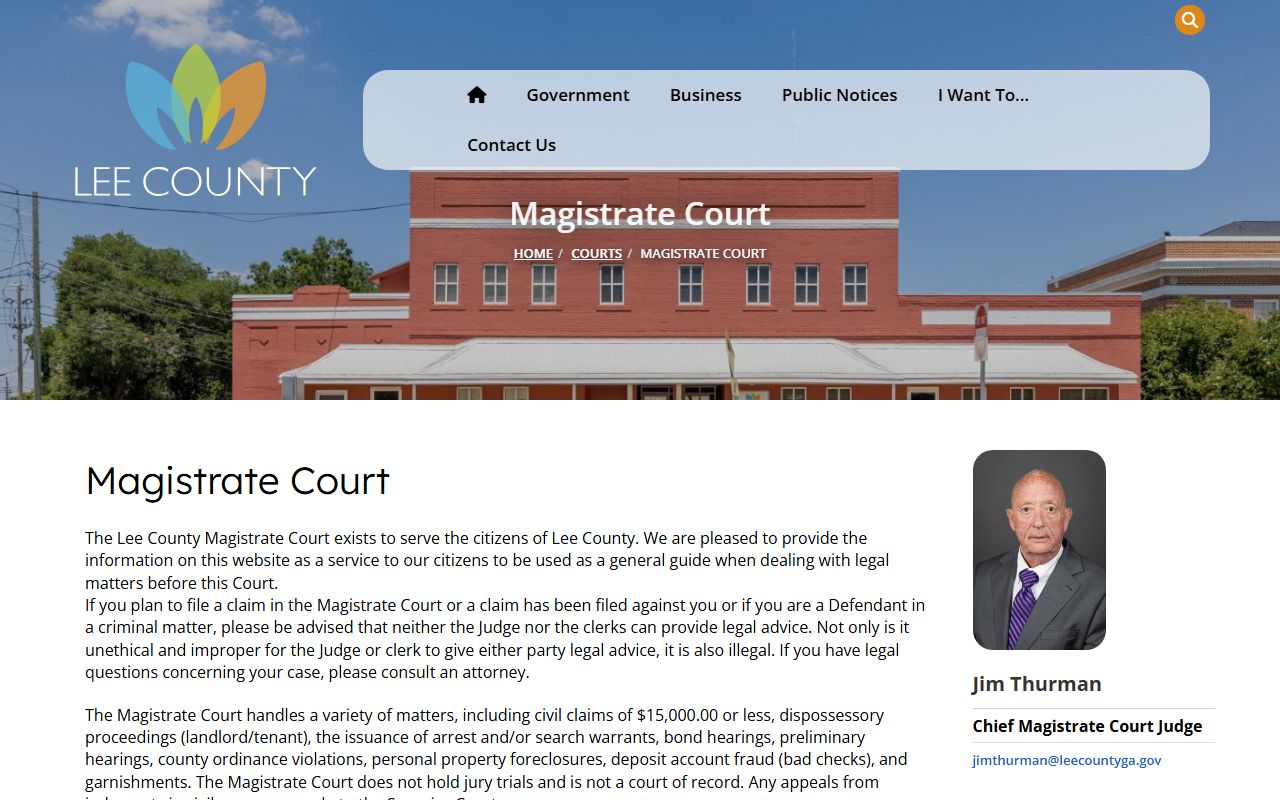
That page matters because it narrows the online docket channel to Magistrate civil files from 2023 to present, with account creation required.
How to Find Lee County Court Dockets
Start by identifying the court from the case notice, citation, file stamp, warrant paperwork, hearing notice, or party names. If the matter is a felony, divorce, adoption, name change, habeas case, major civil suit, garnishment, repossession, deed, lien, or Superior Court warrant, use the Clerk of Superior Court at 100 Leslie Highway, Leesburg, Georgia 31763, or call (229) 759-6018. If the matter is a lower-dollar civil claim, dispossessory, garnishment, or bad-check civil matter in Magistrate Court, the online docket path begins with the Tyler login.
- Confirm the court level before searching. Lee County Superior, Magistrate, and Probate docket records are not in one countywide search box.
- For Magistrate civil files from 2023 to present, open the Tyler public-access login and use an account to review available civil docket activity.
- For Superior Court criminal, civil, divorce, lien, or deed-related docket entries, contact the Clerk of Superior Court for the case index or copy request.
- For estate, guardianship, will, marriage, vital-record, or traffic-fine docket questions, contact Probate Court at 100 Leslie Highway or call (229) 759-6005.
- If the agency that holds the docket cannot be identified, submit a specific request through Open Records Clerk Kaitlyn Good for routing.
The online open-records form is a fallback, not the first stop for a docket held by a named court. The county routing page sends court case records back to the court office that keeps them.
Lee County Magistrate Civil Dockets
Lee County Magistrate Court publishes the most specific local docket access statement: public access for civil records, civil files from 2023 to present, with account creation required. The visible entry page has a User Name field, Password field, and Forgot Password link. This makes the service public-facing but not anonymous. A person who needs a civil docket in a Magistrate case should expect to create or use a Tyler account before viewing details.
The Lee Magistrate civil public access login is the county-posted entry point for that docket channel.
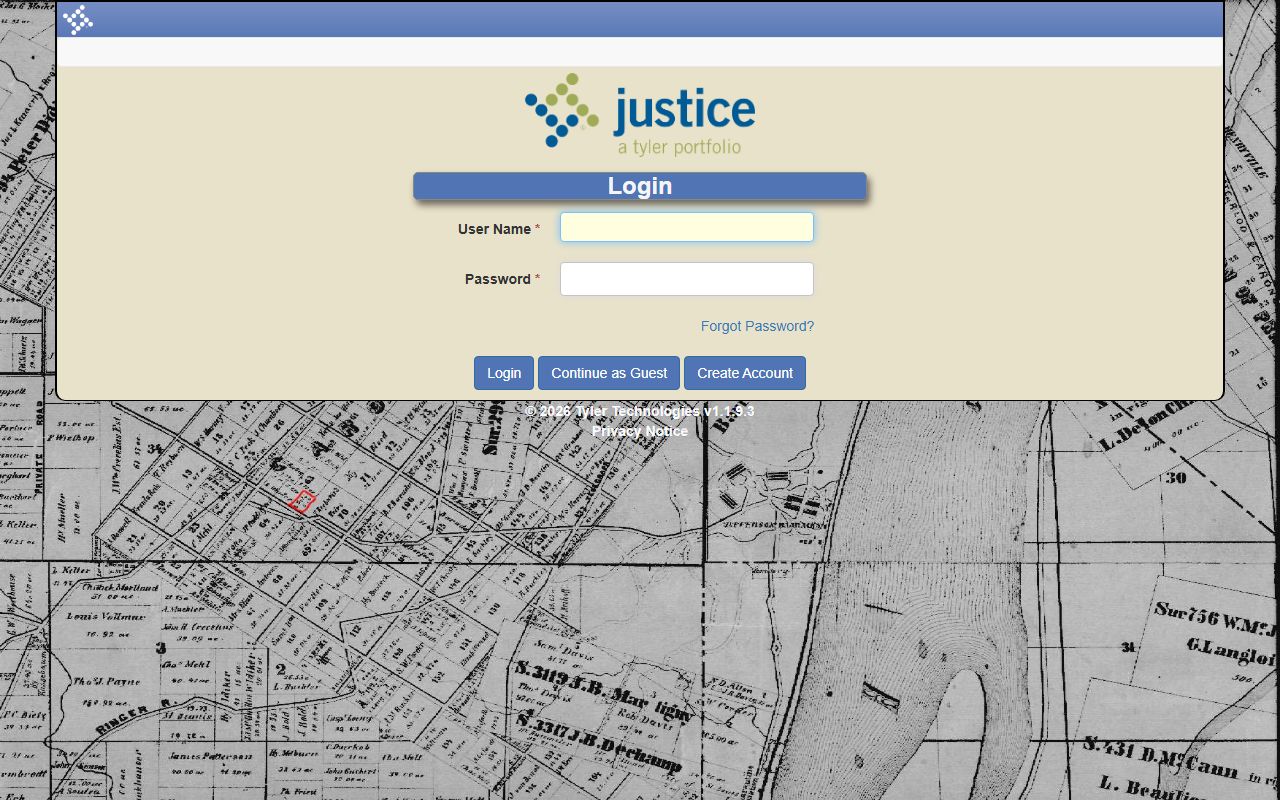
The login screen confirms why a public docket search may still require account setup before any Lee County Magistrate civil entries are visible.
| Field Label | Type | Required | Notes |
|---|---|---|---|
| User Name | Text | Yes | Login field for the Magistrate civil public-access account. |
| Password | Password | Yes | Login credential needed before docket review. |
| Forgot Password? | Link | No | Account recovery for existing Tyler users. |
Lee County Docket Entry Fields
The research did not locate a live sample Superior Court docket entry from a Lee County case, but official forms and the Magistrate civil guide show the core fields likely to appear across docket records. A Statement of Claim uses a Civil Action No., party names and addresses, claim type, jurisdiction basis, amount owed, oath, answer notice, summons, and hearing location. The Magistrate guide adds event details such as hearing notice by mail, written continuance requests, default, written judgments, appeal time, and docket review at the clerk's office.
| Field | What It Shows |
|---|---|
| Entry Date | The date a filing, order, notice, hearing, judgment, or appeal activity was added to the docket. |
| Case or Civil Action Number | The court's assigned tracking number, such as the Civil Action No. used in Magistrate civil cases. |
| Event Type | Complaint, answer, summons, service, motion, hearing, continuance, judgment, default, appeal, fi fa, or disposition. |
| Party or Filing Source | The plaintiff, defendant, petitioner, prosecutor, clerk, judge, or other source tied to that docket event. |
| Hearing Information | Calendar call, hearing date, notice by mail, or courthouse location when public and applicable. |
| Outcome | Judgment, dismissal, disposition, sentence, appeal deadline, or other case result if entered. |
Lee County Courts With Dockets
Each Lee County court has a different docket role. Superior Court is the general-jurisdiction trial court and the place to check for felony cases, major civil cases, divorces, habeas matters, garnishments, liens, deeds, and Superior Court criminal warrants. Magistrate Court is the lower civil and preliminary criminal court, but the county notes that it does not conduct jury trials and is not a court of record. Probate Court handles estate, guardianship, marriage, vital-record, weapons license, and assigned traffic-fine matters.
- Superior Court holds civil, criminal, divorce, deed, lien, warrant, and other general trial-court docket records.
- Magistrate Court provides account-gated public access for civil files from 2023 to present.
- Probate Court keeps estate, will, guardianship, conservatorship, marriage, vital-record, and traffic-fine records where applicable.
- Municipal or ticketing courts may handle city traffic or ordinance dockets, depending on the citation and agency.
- Sheriff Citizen Connect lists arrests, incidents, accidents, bookings, and daily reports, but those are law-enforcement records, not court dockets.
The county's own structure places Lee County in the Southwestern Judicial Circuit with Macon, Schley, Stewart, Sumter, and Webster Counties. The circuit page lists Lee County court schedule terms as the fourth Monday in April and October, which is useful background for Superior Court scheduling but not a public docket search tool.
Lee County Dockets vs Records
A docket is often enough to confirm status, timing, and outcome. It can show that a hearing happened, that a judgment was entered, or that an appeal deadline is running. A full Lee County case record is broader. It may include pleadings, motions, exhibits, orders, warrants, sentencing documents, probation orders, divorce decrees, probate petitions, certified copies, or attachments. When the goal is legal proof, the full case file or a certified copy from the clerk is usually more useful than a docket printout.
| Docket | Full Case Record | |
|---|---|---|
| Format | Chronological list of case events. | Documents, filings, orders, notices, and certified copies. |
| Best Use | Track status, hearing dates, judgments, and appeal timing. | Review the legal content of filings and orders. |
| Access | May be online for Magistrate civil files after account login. | Often requires a clerk request, copy fee, or in-person review. |
| Limits | May not include document images or sealed details. | May include restricted documents that are not public. |
Lee County Civil Docket Events
The Magistrate civil-case guide adds details that help readers interpret docket events. In a Statement of Claim, a defendant generally has 30 days after service to answer, and the guide says no telephone answers are permitted. Answers may be filed in writing or orally in open court in person. If an answer is filed, hearing notice is mailed. On court day, a calendar call occurs, then the court calls a ten-minute recess for parties to discuss settlement because the guide says settlement attempts are required by Georgia law.
Continuance requests must be written and state the reason. One continuance may be granted at the judge's discretion, while a second is harder. Physical evidence must be shown to the other party before it is given to the judge. Accepted evidence becomes part of the court file and will not be returned, so copies should be made before court. The guide also says written judgments are mailed and the court will not give the decision over the phone. A person may review the docket at the clerk's office.
Note: Magistrate civil appeals must be filed within 30 days, while dispossessory appeals have a 7-day deadline.
Lee County Dockets and Filing
Docket activity changes when new filings are accepted. Lee County Magistrate Court links to Odyssey eFileGA and states that attorneys, agents, plaintiffs, and defendants may file claims or answers online. Filer support is available through Tyler at 800-297-5377 or efiling.support@tylertech.com. The Magistrate fee list also says online filing is available 24 hours a day for an additional charge, although the PDF appears to contain a typoed URL while the Magistrate page links to the Tyler eFileGA domain.
The official Odyssey eFileGA landing page is the current e-filing portal linked by Lee County Magistrate Court.
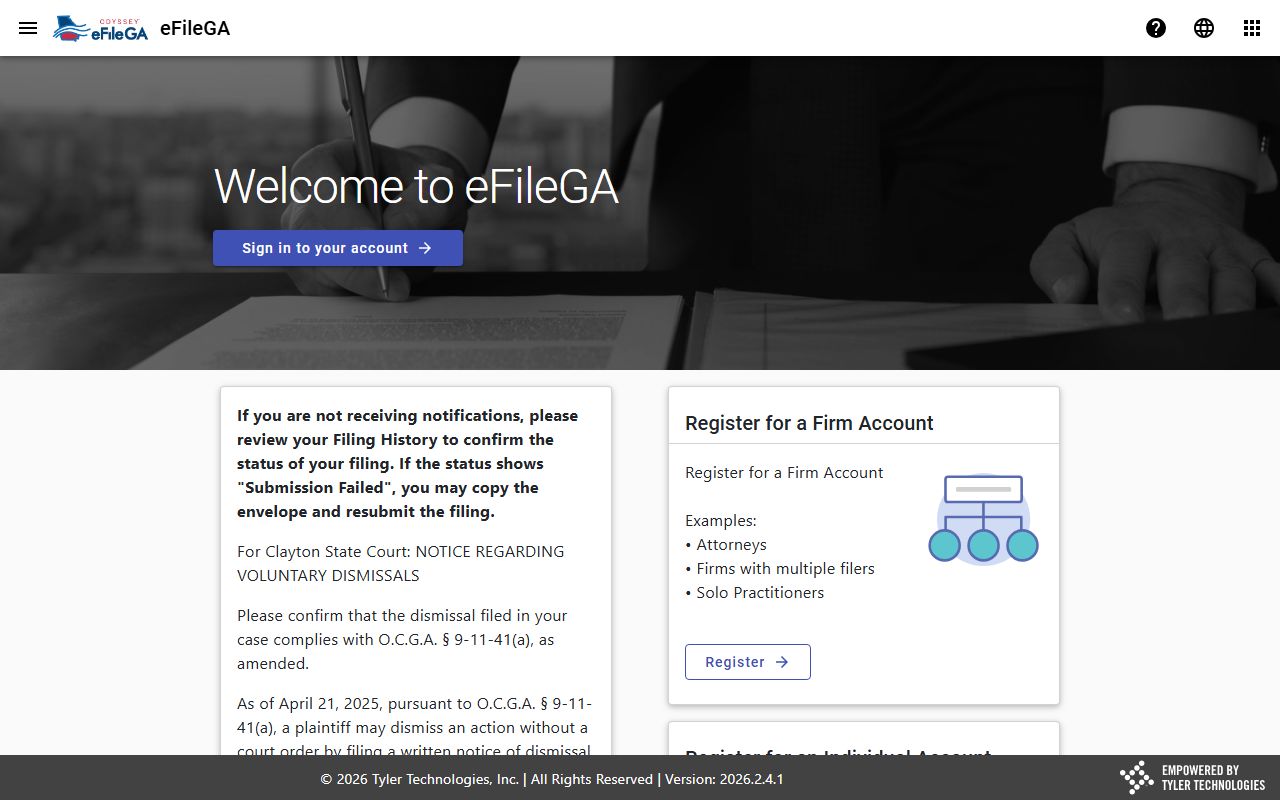
Electronic filing is not the same as public docket search, but filings made through the system can become events in the court docket after acceptance.
Older Lee County Court Dockets
Older or non-digitized Lee County court dockets should be requested from the office that keeps the record. For Superior Court, call (229) 759-6018 or visit the Clerk of Superior Court at 100 Leslie Highway. For Probate Court, call (229) 759-6005. For Magistrate Court, call (229) 759-6016 or (229) 759-6031. If the file is a sheriff incident, accident, arrest, or booking record instead of a court docket, the Sheriff's Office and Citizen Connect channels are the relevant access points.
When a docket request goes through open records, make it specific. Lee County asks requesters to include date ranges, subjects, record types, authors, and similar details. Open Records Clerk Kaitlyn Good is the fallback routing contact at 102 Starksville Avenue North, Leesburg, Georgia 31763, (229) 759-6000, kaitlyn.good@leecountyga.gov. Costs can include search, retrieval, redaction, supervision, copying, and media charges after the first 15 minutes of labor.